
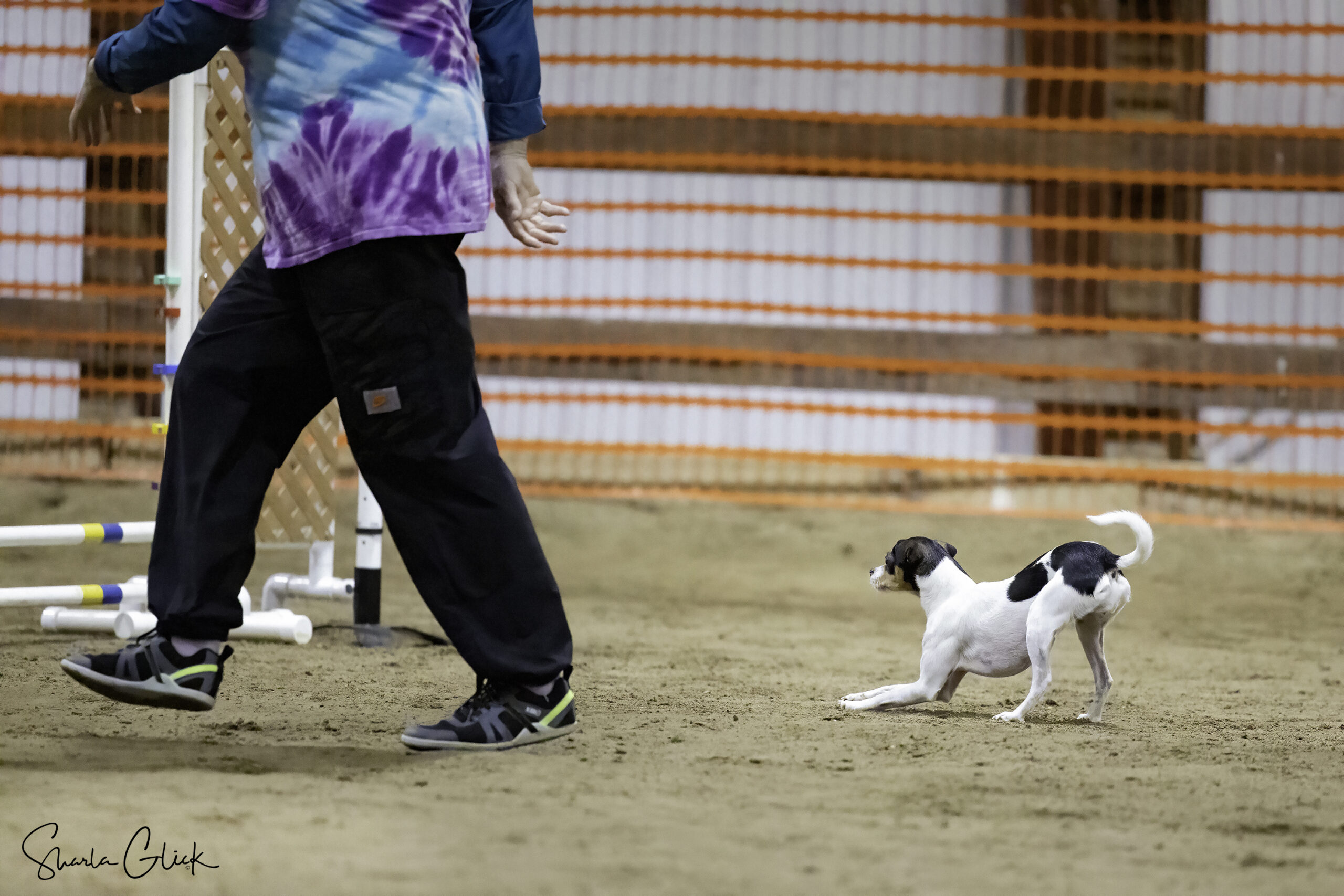
Agility competitors, are you frustrated with your dog's start line? Do you feel like getting your dog to stay in position is a constant battle? Does your dog remain in position at home and in class but never at the trial? Are you confused because your dog's start line never improves at the trial, even though you reward your dog for staying while you're training? Do you have to threaten your dog with a firm voice and posture to get a stay? Or do you need to plead with your dog to go after you lead out?
You also might have a young dog that you want to start differently than your previous dogs by building the knowledge, communication, training, and handling to build a career-long start line.
How do you feel?
Starting an agility run with lots of conflict is not fun for you or your dog. Let's focus on how you feel as you enter the ring first (because it's impossible to understand how the dog feels). When you know that your dog's start line is fragile or nonexistent, as you move toward the first obstacle, your stress levels increase, and your emotional stability plummets. That lack of self-regulation can cause you to make poor decisions to create a quick picture of how you want the dog to perform. No one, including the handler, wants to go into the ring feeling stressed. Handler stress and a lack of a plan will negatively affect everything - the handler, the dog, the run, and the future performances at the trial.
As humans, we like to control our dogs by demanding, using body blocks, using harsh language, hovering, and other behaviors that show a lack of trust in or training of our dogs.
Wouldn't it be wonderful to get rid of those "icky" desperate feelings about your dog’s start line routine and trust your training, handling, and communication with your dog to be able to lead out confidently?
Changing habits are challenging
What if I told you that cleaning up your handling and communication skills can be the biggest game changer to maintaining your dog's start line? It's true! I've worked with many dog and handler teams over the years, and most of the issues have changed dramatically when the handler recognizes what patterns and assumptions have contributed to the struggle with this skill.
I will tell you upfront that this is not an easy change because it will involve more changes from you (the handler) than other strategies. Changing habits can be challenging - but at the same time, it is easier because you are in control of that change.
You will do this by addressing the following:
- Clear up the communication between you and your dog
- Change your mindset
- Increase your confidence
- Develop a plan and adjust as the training develops


0 Comments